 English
 Nederlands
 German
 Français
Nanoplastia hair treatment explained
A nanoplastia treatment is a smoothing salon service whose active is glyoxylic acid. The cream goes onto clean, dry hair, processes, is partly rinsed out and is closed with the flat iron. There is no nanotechnology in it, and the Nanoplex pack says so itself.
Nanoplastia is a category name out of the Brazilian market, not a separate chemistry. This page sets out what is actually in it, why the name misleads, which five systems we carry, and where their protocols part company. Every figure below comes from the packs themselves, read on 14 September 2026.
What is a nanoplastia treatment?
A salon service with glyoxylic acid as the smoothing active. All four packs we read name it, and it is the acid that does the smoothing, not the guarana, the acai or the grape seed the front of the bottle is named after.
The name says nothing further about the chemistry. Nanoplastia, taninoplastia, express protein: these are line names out of the Brazilian market that sit side by side on the same shelf with the same acid inside them. Anyone who wants to understand the service reads the ingredient list, not the front of the bottle. That is exactly the point our comparison page makes across all six routes on our shelf.
Is there nanotechnology in nanoplastia?
No. We do not have to assert that, because it is printed on the bottle.
Nanoplex est une marque déposée. Le produit ne contient pas de nanomatériaux. (Nanoplex is a registered trademark. The product does not contain nanomaterials.)The French text on the pack of Vitta Gold Nanoplex Arginina Solar 1 L, read on 14 September 2026
There is also a check you can run yourself, on any pack in your stockroom. The EU Cosmetics Regulation requires that an ingredient present as a nanomaterial is followed on the list by the word nano in brackets [3]. On none of the four lists we read does that word appear anywhere. No brackets, no nano.
Where the name comes from is marketing: nanoplastia sounds like something small and technical that penetrates deeply. The smoothing itself happens with an acid and an iron, the same as the other routes. Telling a client the treatment works on nanoparticles tells her something the label contradicts.
What does glyoxylic acid do to the hair fibre?
It reacts with the keratin's own amino acid residues, and the heat of the iron completes the change. What it does not do is work the way a perm or a cysteamine smoothing works, and that is the single most useful thing to know about this route.
The chemistry was put on record by Boga and colleagues in the International Journal of Cosmetic Science in 2014, using Raman and infrared spectroscopy on yak hair [1]. They found that the acid forms imine bonds with nucleophilic sites on the keratin, that both the electrophilicity of the carbonyl group and the temperature decide whether those bonds form, and that the treatment produces major conformational rearrangements within the hair fibre rather than on the cuticle. Temperature, in their reading, is bound up with dehydration, which is why this route ends at an iron and not at a rinse.
A later study from the University of Sao Paulo, in the International Journal of Trichology, set glyoxylic acid beside sodium hydroxide, guanidine hydroxide and ammonium thioglycolate [2]. Its conclusion is the one to carry to the backbar: the mechanism does not appear to be based on breaking and rearranging the disulphide bridges, although it does alter them. The same paper notes that a glyoxylic acid application, unlike a thioglycolate service, is not followed by a neutralising step — the iron does that work — and that the mechanism is not yet entirely understood.
So: no reducer, no neutraliser, and an iron that is not optional. That also explains what is printed on the pack, and across all four it is strikingly consistent: apply one centimetre off the scalp, process, rinse out 60%, blow dry, then 10 to 15 passes per section at 180 to 230 C [4]. That 60% is not a detail: on this route a part of the product is deliberately still in the hair when the iron goes on.
All four want a strand test first, all four are professional use only, and all four advise gloves and a ventilated area. These are chemical services, not masks.
Which nanoplastia systems are on the shelf?
Five, across three lines and two brand names. All five come from the same manufacturer.
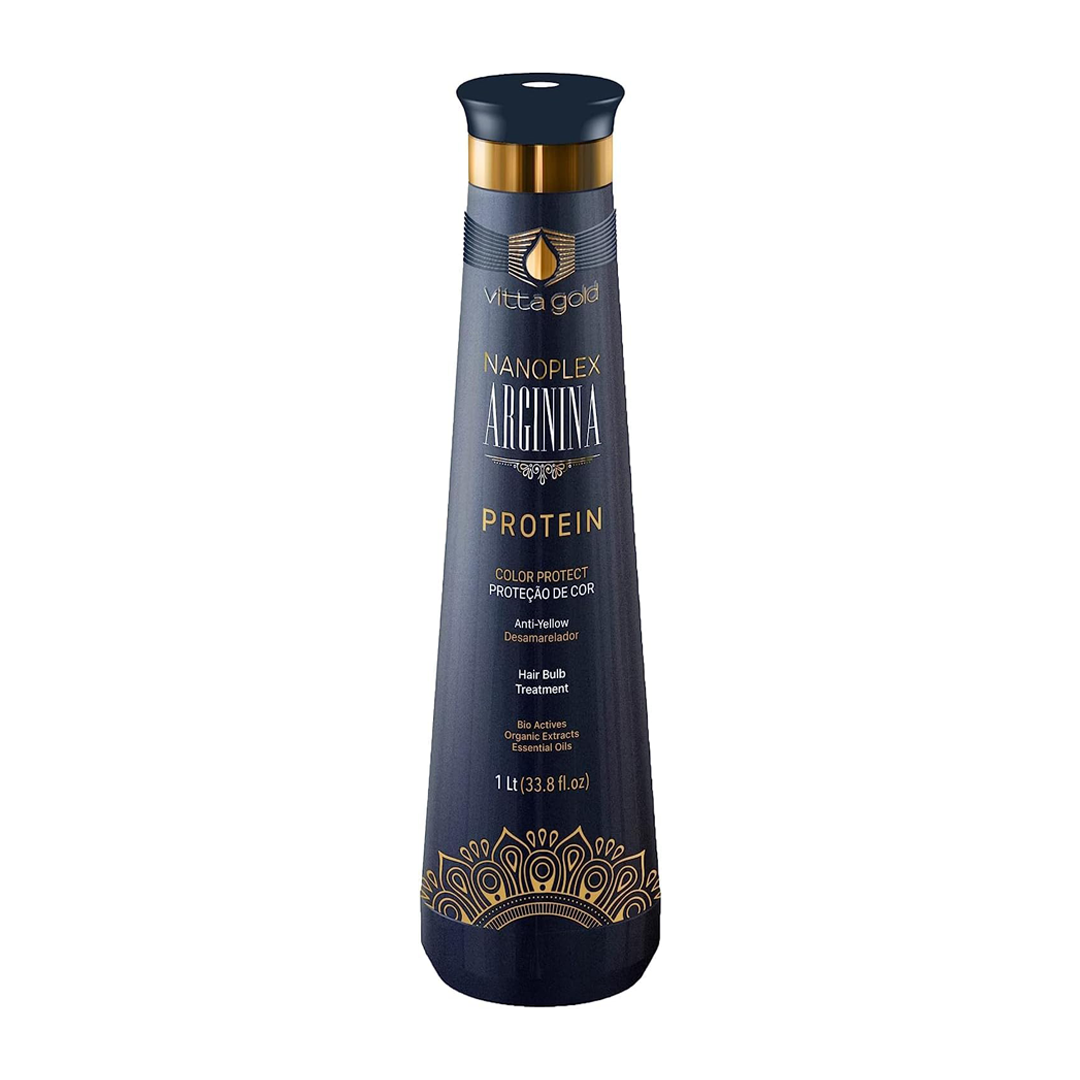
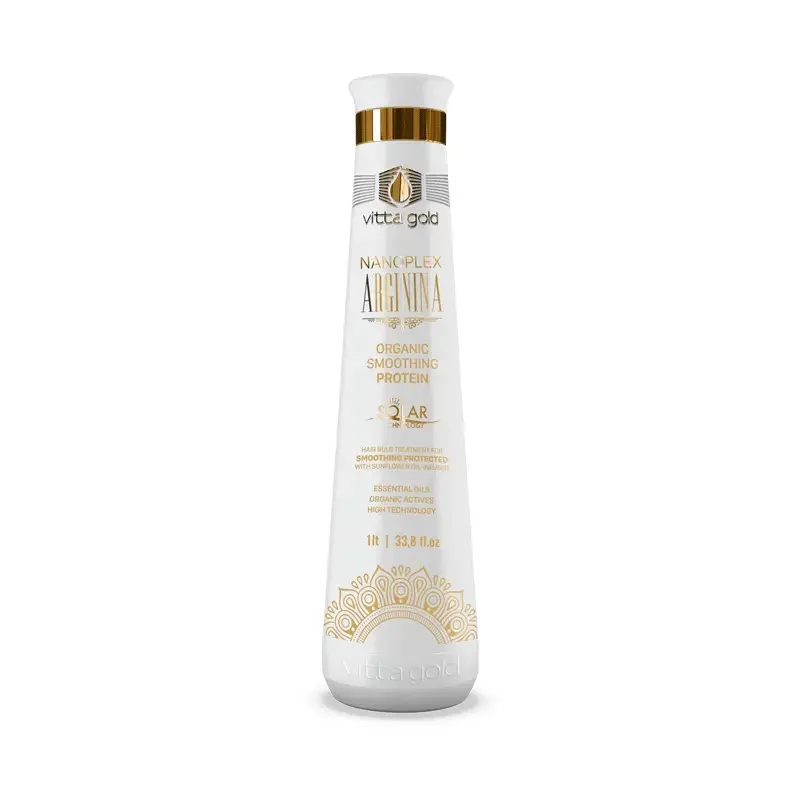
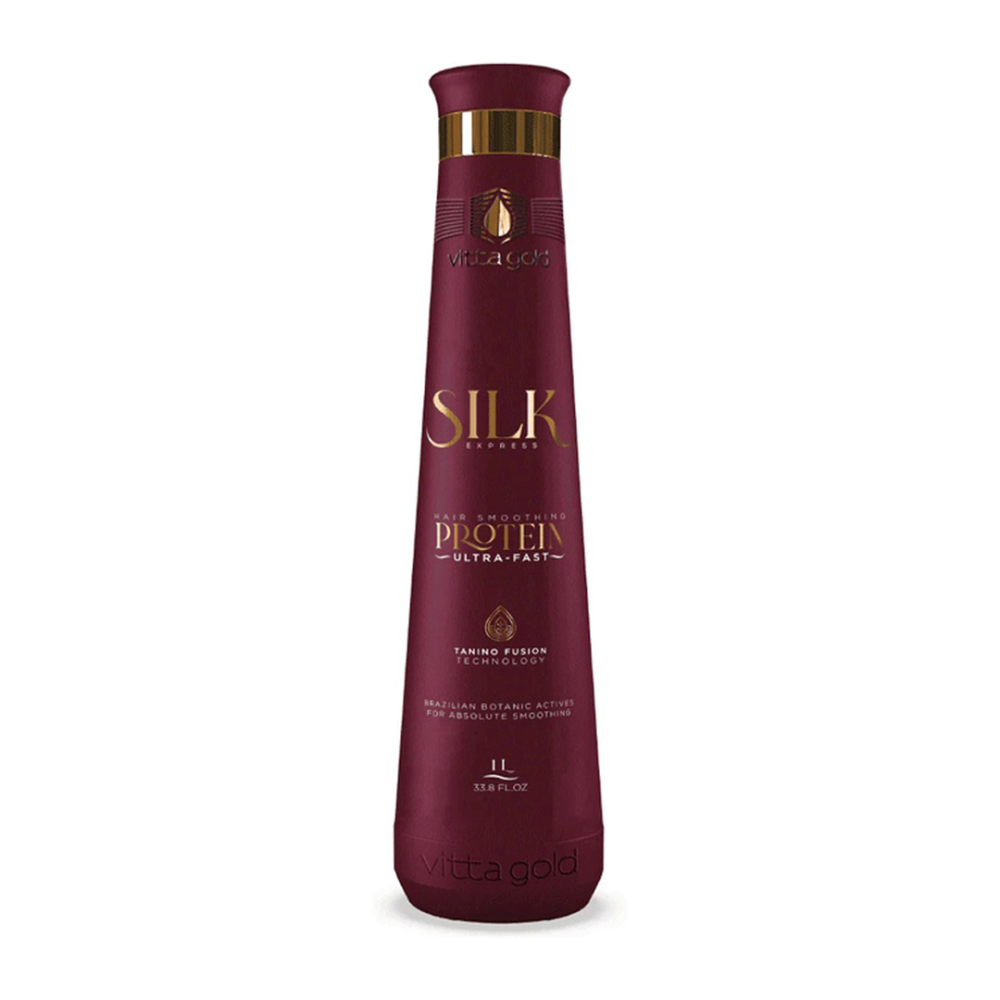
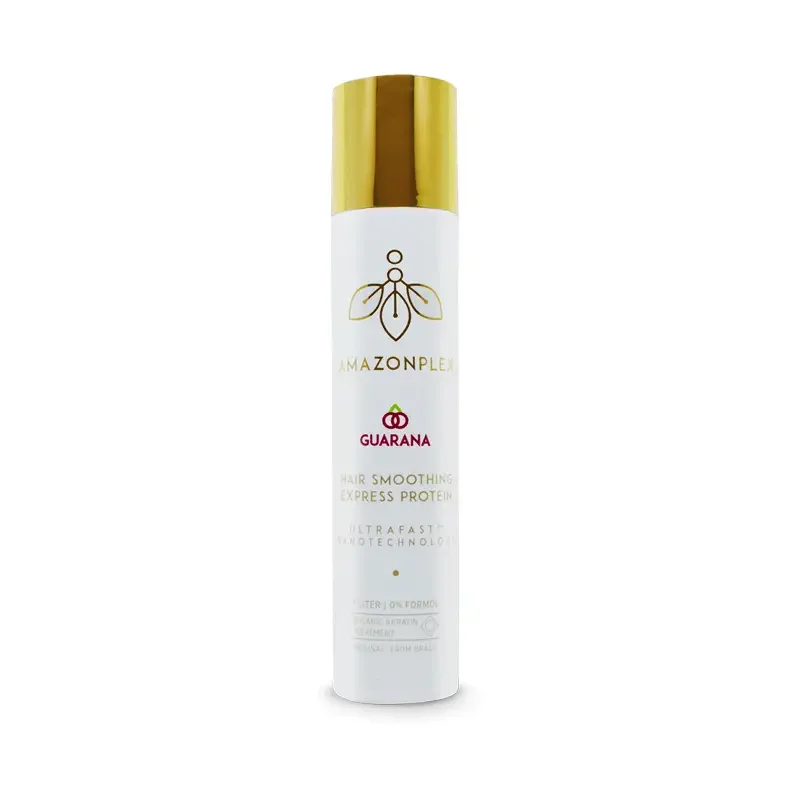
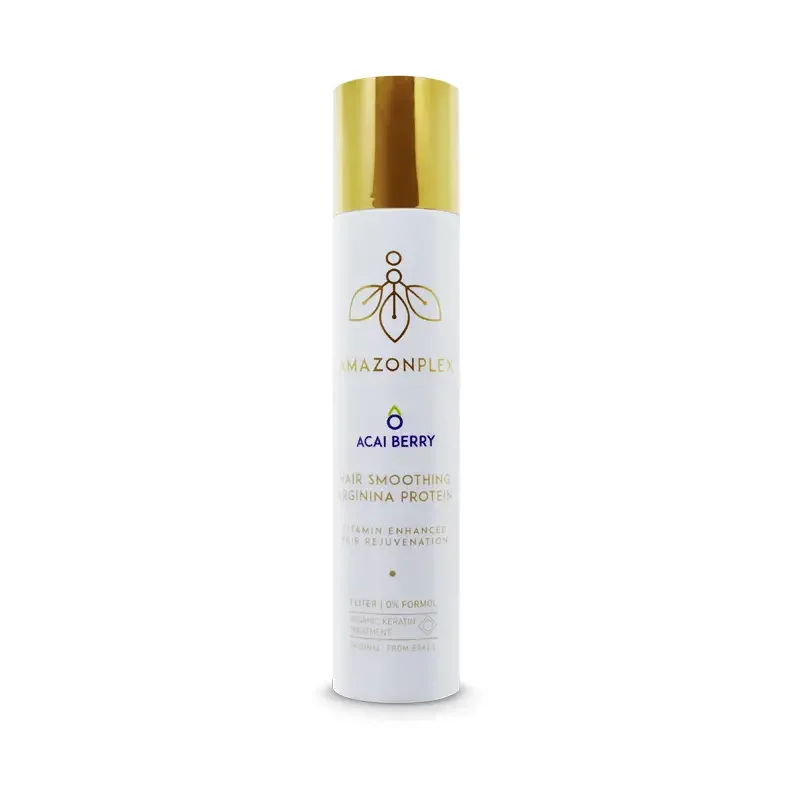
All five packs print the same manufacturer: Vitta Gold Comercio de Cosmeticos Ltda, with Avanzza B.V. in Amsterdam as the EU responsible person. Amazonplex and Nanoplex are two brand names from one house, with the same acid in them. That is not an accusation; it is precisely why you read the list and not the name.
One acid, two speeds: what separates the protocols
The processing time. The acid, the rinse step and the iron window are identical on all four packs we read; only the time in the hair differs, and that is what decides your column.
A difference of 15 to 20 against 40 to 60 minutes is not a nuance in a full diary. It is the difference between two clients in a morning and one. Which is why Silk Express and Guarana are positioned as express, and that is what the word on the bottle means.
Which system do you book for which question?
A client describes her hair, not an acid. This is how that translates into one of the five.
- Blonde or coloured hair that goes warmer after every treatment Nanoplex Arginina. The same route plus Acid Violet 43, the violet pigment that cools warm tones. It is a toning, not a colour service.
- The same hair, but no cool cast wanted Nanoplex Arginina Solar. Sunflower oil instead of the pigment. Note that Solar Technology refers to that oil, not to sun protection.
- A full column and little time Silk Express or Amazonplex Guarana. Both process in 15 to 20 minutes instead of 40 to 60.
- A client who wants a formaldehyde-free route None of the five. Glyoxylic acid falls outside that definition. Send her to cysteamine or to plant tannin.
- Fine or damaged hair Condition first, smoothing after. The strand test is not optional here.
Why do we not call this formaldehyde-free?
Because glyoxylic acid falls outside the definition we hold to, and we do not stretch that definition for a category we sell ourselves.
- The line we draw. Formaldehyde-free means, for us: no formaldehyde, no formaldehyde-releasing preservative and no glyoxylic acid on the list. This category fails the third condition. Our guide explains why the line sits there.
- It is not a permanent relaxer. The result fades and the regrowth comes in untreated. The Nanoplex Arginina product sheet gives up to 3 to 5 months with the matching home care; that is what the sheet says, and the packs themselves carry no durability claim.
- It is not nanotechnology. See the pack quoted above, and the absence of the word nano from every list.
- It is not a home treatment. All five are marked professional use only, with gloves, ventilation and a strand test first.
- We do not call it gentler or safer than another route. What we do is show the list and let the client choose.
To see this route beside the others on our shelf, that is hair botox, keratin or protein. The cysteamine route is in cysteamine smoothing explained and the plant tannin route in taninoplastia explained.